What to Bring to Shell Island: an Island With Nothing on It
What to bring to Shell Island comes down to one fact people miss until they're standing on the sand: there is nothing out there. Your tour supplies the mask, snorkel and fins, so the reassuring part is short. What's left is a pack-in, pack-out day on an undeveloped barrier island, and this guide covers it item by item, plus the shelling rule that trips up first-timers every week.
Quick answer
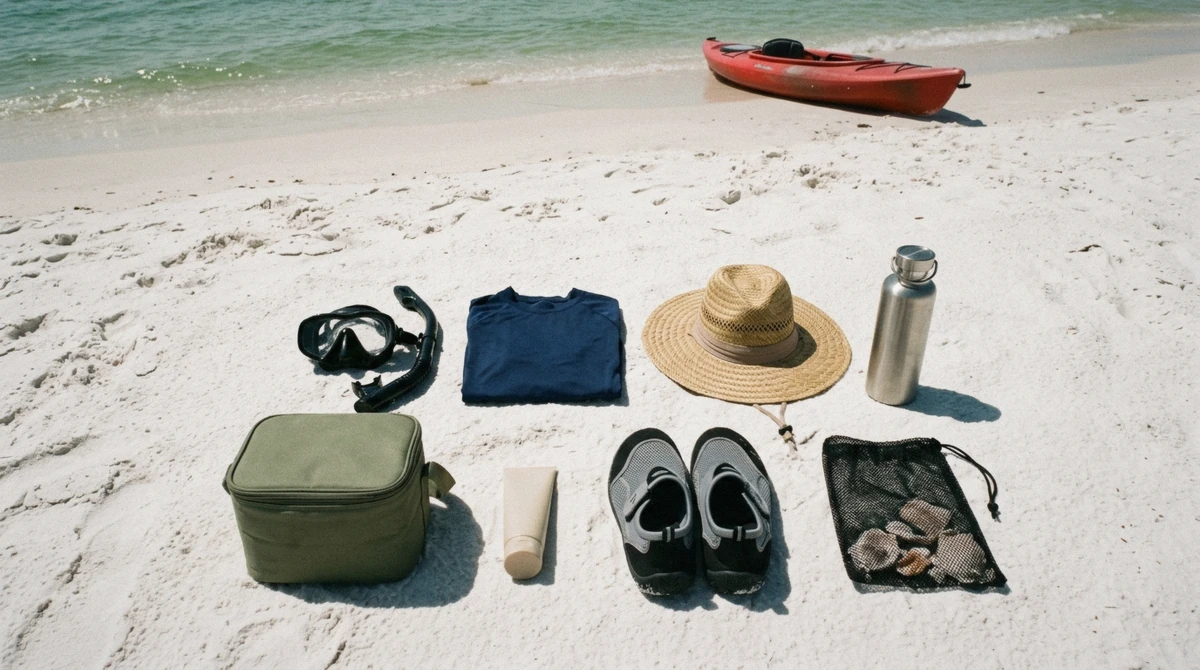
Your boat provides mask, snorkel and fins, so the real packing list is short: reef-safe sunscreen, a hat, water shoes, cash, a dry bag and a refillable water bottle, since there is nothing to buy once you're ashore. Shell Island has no restrooms, no shade and no store of any kind, so plan the day around that before you plan your outfit.
Key takeaways
- Snorkel gear (mask, snorkel, fins) comes with every trip listed here, from $49 to $57, so it's not on your list (compare the boats)
- There are no restrooms on the island at all; go before you board and don't count on finding one ashore
- There is no shade anywhere on Shell Island, so sun protection is the single biggest packing category
- Water runs about 62°F in January and February and about 86°F in August, which changes what you wear more than what you carry (full month-by-month breakdown)
- Take empty shells only; a live sand dollar or starfish goes back where you found it, by Florida wildlife rule
- Everything you carry onto the island, you carry off, since there are no bins
An Island With Nothing on It: What That Actually Means
Shell Island sits between St. Andrew Bay and the Gulf of Mexico, seven miles of undeveloped shoreline with no bridge and no road. Getting there means a boat, and once you're ashore, there are no facilities at all: no restrooms, no fresh water, no shade structures, no food and no trash cans anywhere on the island. Part of it sits inside St. Andrews State Park as protected habitat, which is exactly why it has stayed this way and exactly why it looks nothing like the beaches with pavilions and snack bars a few miles up the coast.
- No restrooms, anywhere on the island
- No fresh water or drinking fountains
- No shade structures, umbrellas provided, or tree cover to speak of
- No food vendors, snack bars or vending machines
- No trash cans, so everything goes back on the boat with you
- No lifeguards on duty at any point of the shore
That last point matters as much as the rest. Whatever you bring for sun, water and comfort is what you have for the day, and whatever wrapper, bottle or peel comes ashore with you needs to leave the same way. It is a genuinely undeveloped island, and that is the whole appeal of it, but it means the planning happens before you leave the dock, not once you're standing on the sand wondering where the bathroom is.
The Packing Checklist
This is the short list that actually matters. Your tour handles snorkel gear, so everything below is what's genuinely on you.
- Reef-safe sunscreen, there is no shade to fall back on if you miss a spot
- Wide-brim hat or cap with a strap, the crossing has open wind, a loose hat goes overboard
- Water shoes, the sand gets hot and shell fragments turn up on both shores
- Refillable water bottle, filled before you board, nowhere on the island sells water
- Cash, small bills, for tips and any dockside extras before or after
- Dry bag or waterproof phone pouch, protects your phone on an open boat
- Change of clothes left in the car, you will be salty and wet on the ride back
- Light rash guard or cover-up, a second layer of sun protection that doesn't wash off
- Beach towel, the boats don't supply one for the sand
- Small cooler bag for anything you pack in, comes back with you, nothing stays
- Motion-sickness tablet, taken ahead of time, if you're prone to it on open water
- Sunglasses with a retention strap, easy to lose off the side of a moving boat
What the Boat Provides and What You Bring
Every trip listed on this site supplies the water gear. Everything else on the island is on you, which is the short version of the table below.
| Item | Provided by the Boat | Bring Your Own |
|---|---|---|
| Mask, snorkel, fins | Yes, every tour here | No |
| Flotation vest | Yes, available on request | No |
| Drinking water | Not guaranteed island-side | Yes, fill up before boarding |
| Sunscreen | No | Yes, reef-safe |
| Towel | No | Yes |
| Restroom access | Varies by boat, none on the island | Plan ahead, go before you board |
| Shade | None, on the boat or the island | Hat and cover-up |
| Food | No | Yes, and pack it back out |
| Cooler / beach gear | Not supplied | Allowed, yours to carry |
| Dolphin-watching narration | Included on the crossing | No |
| Trash disposal | None on the island | Pack it out with you |
Beyond the gear itself, the trips differ slightly in structure: the Footloose catamaran tour runs a single snorkel stop with shelling time, while the two-stop tour adds a second anchor point and more beach time. Every one of the catamaran trips with snorkel gear included covers the water gear the same way; the island itself has nothing on it once you're ashore.
Trips That Supply the Gear
Every trip here includes mask, snorkel and fins, so you're not buying or packing your own set.
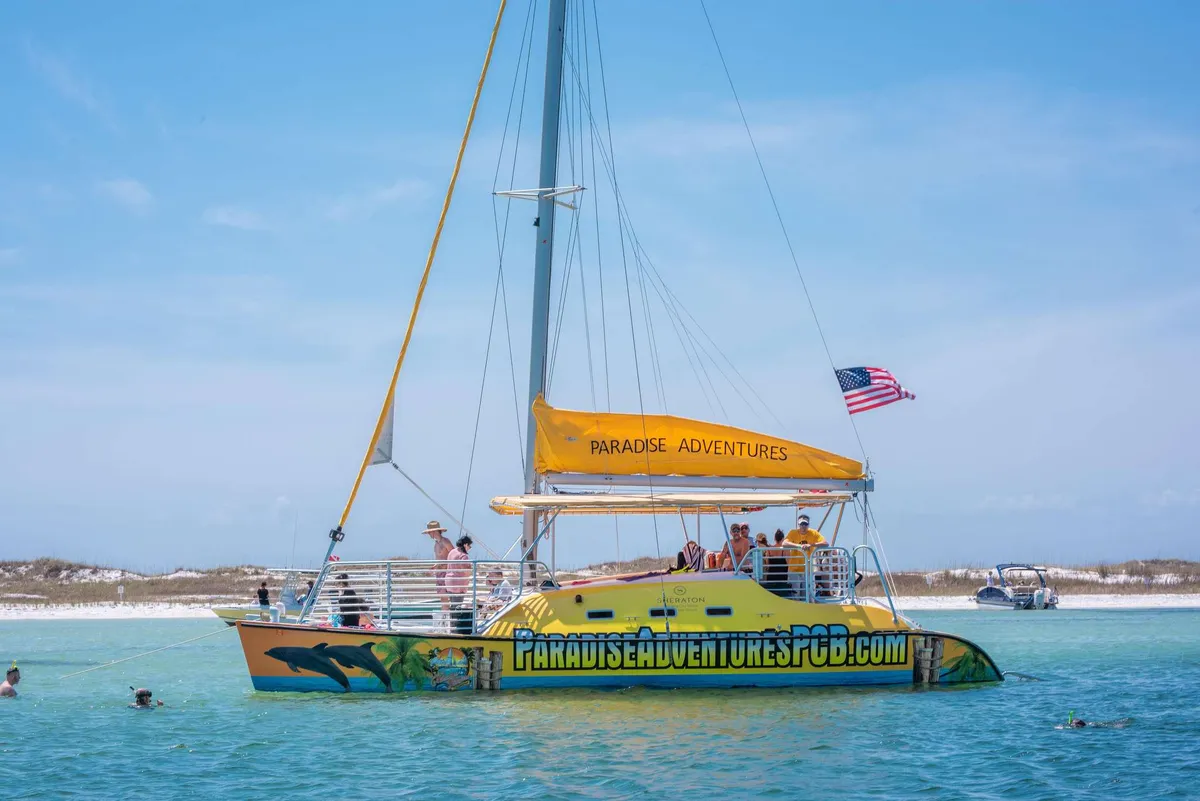 from $49Most Popular — 126 Reviews
 Shell Island Footloose Catamaran Snorkeling Tour
A 3-hour trip aboard the Footloose catamaran, cruising the blue-green water off Panama City Beach to snorkel around Shell Island and look for dolphins on the way. There…
- Sail aboard the Footloose catamaran
- Snorkel the clear water around Shell Island
- Dolphin watching on the cruise
- Time to collect seashells on the Gulf shore
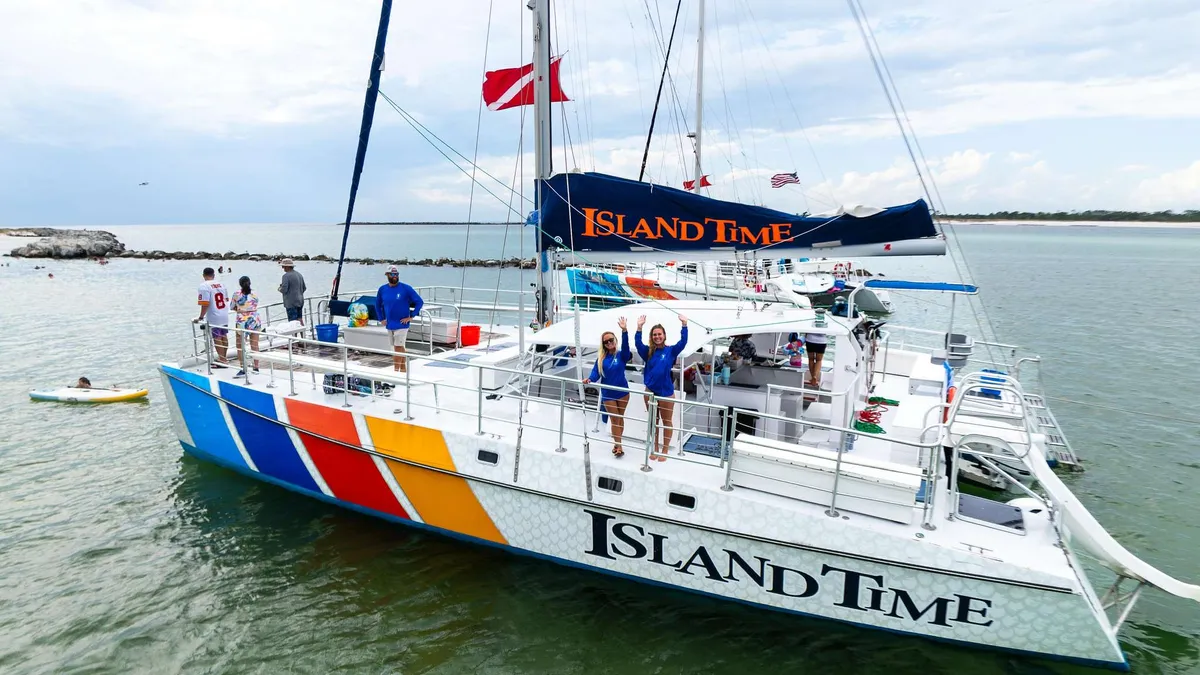 from $52Top Rated — 4.9★
 Shell Island Snorkel & Dolphin Catamaran Cruise
A 3-hour catamaran cruise from Panama City Beach out to Shell Island, with a snorkel stop in the clear, calm water of St. Andrew Bay and time to…
- 3-hour catamaran cruise to Shell Island
- Snorkel stop in calm, clear bay water
- Watch for bottlenose dolphins along the way
- Snorkel gear included, good for beginners
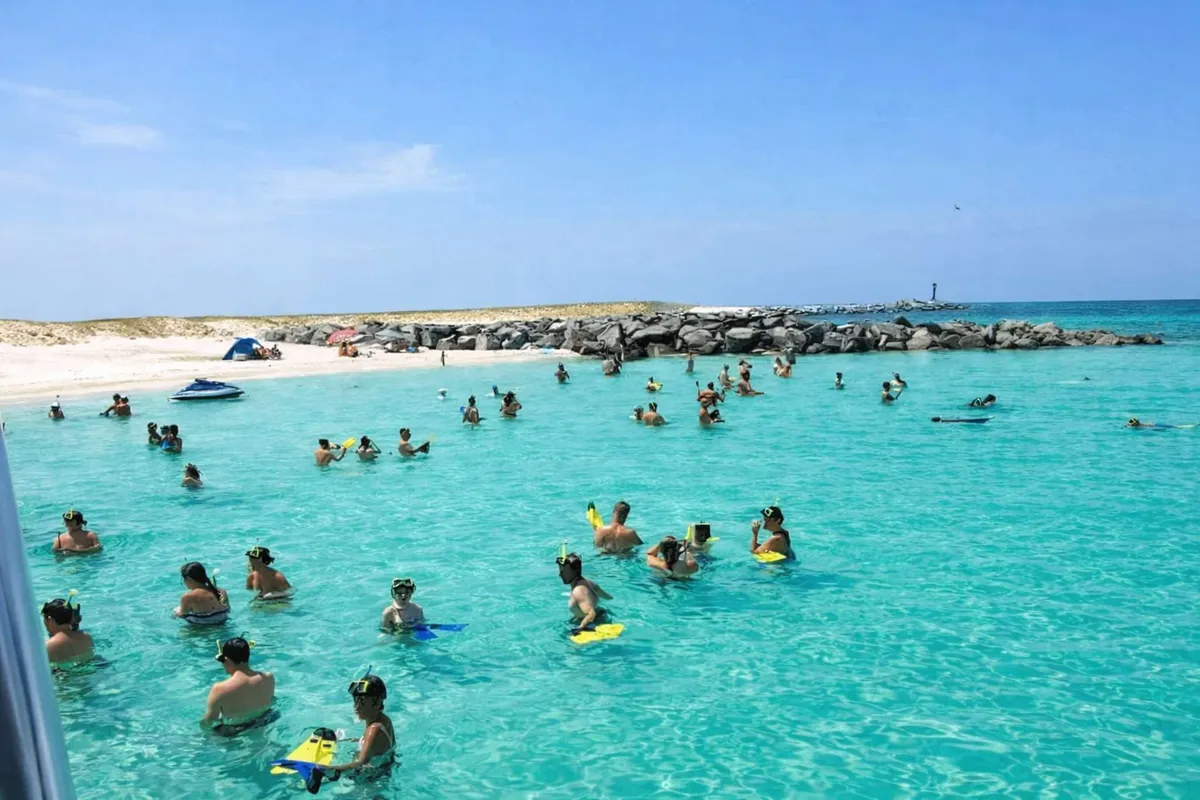 from $57Two Snorkel Stops
 Shell Island Snorkeling with Two Stops & Dolphin Watching
A 3-hour cruise from Panama City Beach with two snorkel stops around Shell Island, plus dolphin watching and time to relax on the island's pristine beaches. A knowledgeable…
- Two snorkel stops around Shell Island
- Dolphin watching in St. Andrew Bay
- Beach time on Shell Island's white sand
- Local crew with gear provided
Water, Food and the Cooler Question
You can bring a cooler and beach gear, and every boat we've worked with is fine with it, but there is nowhere on the island to buy so much as a bottle of water, so pack in whatever you plan to drink or eat and pack it back out. That includes ice, wrappers and anything else that comes ashore with you. There is no trash service on Shell Island, and leaving anything behind, intentionally or not, undoes the reason the island still looks the way it does.
A soft-sided cooler travels easier on a boat than a hard one, and it's one less thing to wrestle onto the sand. Fill your water bottle before you leave the marina; the crossing is short but the day in the sun is long, and there is no fresh water source anywhere on the island.
Sun: There Is No Shade Anywhere
This is the packing category that matters most. There is no shade structure, no umbrella rental and no tree line worth the name on Shell Island, and the boat deck itself is mostly open too. Reef-safe sunscreen, reapplied rather than applied once, is the baseline.
A rash guard or light long-sleeve cover-up adds protection that doesn't wear off in the water, and a hat with a strap keeps you from losing it over the side on the crossing. If you burn easily, plan for full coverage rather than sunscreen alone; there is nowhere to retreat to once you're ashore.
What to Wear in the Water, by Season
Water temperature is the real driver of what you wear snorkeling here, not the calendar month by itself, and it swings a lot across the year.
| Season | Water Temp | What to Wear |
|---|---|---|
| Winter (Jan–Feb) | About 62°F | Full wetsuit recommended, most people find this too cold without one |
| Early spring (Mar–Apr) | 65–70°F | Shorty wetsuit or rash guard over a swimsuit for longer stays |
| Late spring (May) | About 77°F | Rash guard is comfortable for most, wetsuit optional |
| Summer (Jun–Aug) | 83–86°F | Swimsuit and rash guard, no wetsuit needed |
| Fall (Sep–Oct) | 78–84°F | Swimsuit and rash guard, still warm through October |
| Early winter (Nov–Dec) | 66–71°F | Rash guard or shorty wetsuit depending on tolerance |
None of the boats here supply wetsuits, so if you're booking a January or February trip and know you run cold, that's a rental to arrange on your own beforehand. For a full month-by-month breakdown of water temperature and what each part of the year is actually like on the water, see the best time to snorkel Shell Island guide. Last verified: August 2026.
Shelling: What You May Take and What You May Not
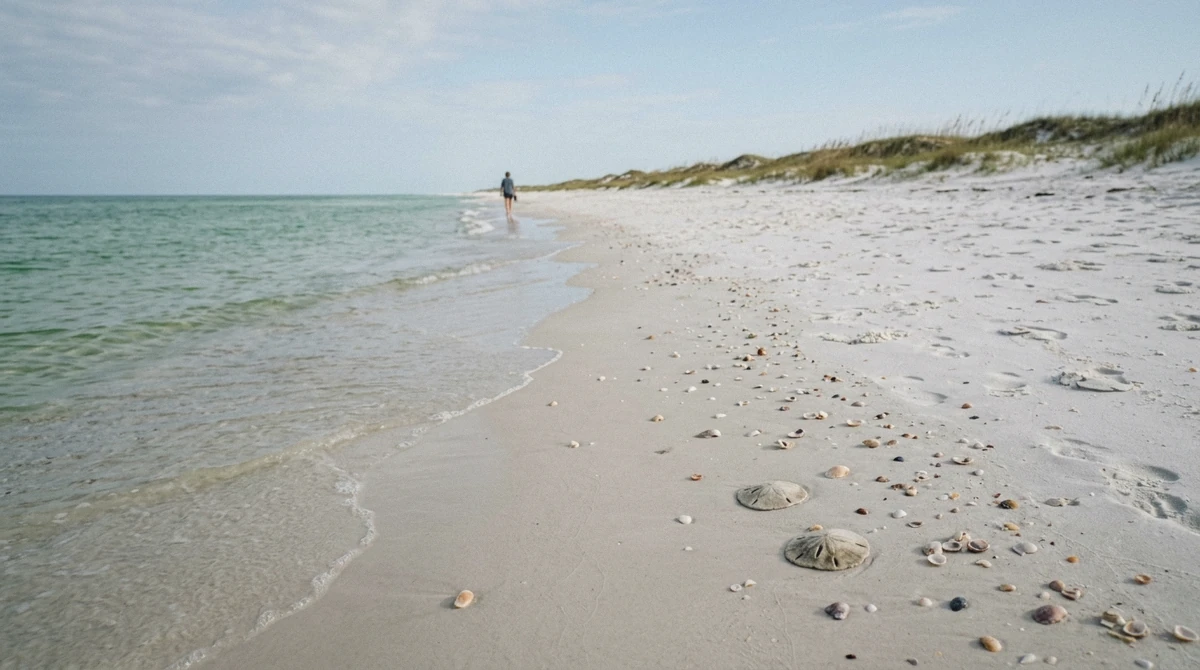
Shell Island earns its name on the Gulf-facing shore, where sand dollars and a wide range of shells wash up regularly, and shelling is one of the best reasons to build in time ashore rather than heading straight to the water. The rule that trips people up is a Florida Fish and Wildlife Conservation Commission rule, not a suggestion: harvesting a shell that still has a living organism inside it requires a Florida recreational saltwater fishing licence, even picked up from the sand. Take empty shells only.
- A bleached, white sand dollar is empty and fine to keep
- A brown or grey, fuzzy-textured sand dollar is alive and goes back in shallow water
- The same rule applies to starfish and any shell you can feel movement inside
- Inside the state park boundary, leave living things where you found them regardless
One more thing worth knowing before you walk the Gulf shore in summer: loggerheads and other sea turtles nest on the undeveloped part of the island, and nests are sometimes marked and roped off. Keep well clear of any marked area, don't dig near it, and don't shine a light on it if you're there after dark. Last verified: August 2026.
What to Leave at Home
A short list of what not to bring saves you a problem later in the day, on the boat or on the sand.
- Glass containers of any kind, a real hazard on a boat and on bare feet
- Single-use plastic you can't easily carry back out with you
- Jewelry or anything you'd genuinely mind losing in the surf
- Food scraps meant for wildlife, since feeding any animal here, dolphins included, is not something to attempt (the honest rule on dolphins)
- A hard expectation that you'll find shade; bring your own instead
Pack light and pack smart and Shell Island gives back more than most beaches with a full parking lot and a snack bar ever do. The whole draw of the place is that it's still undeveloped, and a few minutes of planning before you leave the dock is what keeps it that way while keeping you comfortable for the day.
Frequently Asked Questions
What should I bring to Shell Island?
Reef-safe sunscreen, a hat, water shoes, cash, a dry bag and a refillable water bottle. Your boat supplies the mask, snorkel and fins, so those aren't on your list.
Are there bathrooms on Shell Island?
No. There are no restrooms anywhere on the island. Go before you board, and don't plan on finding facilities once you're ashore.
Can you bring a cooler to Shell Island?
Yes, coolers and beach gear are allowed on every trip we've worked with. There is nowhere on the island to buy food or water, so bring what you need and carry it back out with you.
Is there shade on Shell Island?
No, there is no shade structure or meaningful tree cover anywhere on the island. Sunscreen, a hat and a cover-up are the real substitute.
Can you take shells from Shell Island?
Empty shells only. A shell containing a living animal, including a live sand dollar or starfish, requires a Florida recreational saltwater fishing licence to harvest and should otherwise go back where you found it.
Do I need to bring my own snorkel gear?
No. Mask, snorkel and fins are included on every trip here, from $49 to $57 (compare the boats), so there's no need to buy or pack your own set.
What should you wear snorkeling in Florida in winter?
With water around 62°F in January and February, a wetsuit is worth arranging, since most people find that temperature uncomfortable without one. See the seasonal water temperature guide for the rest of the year.