Dolphins at Shell Island: What You'll See and the Rules
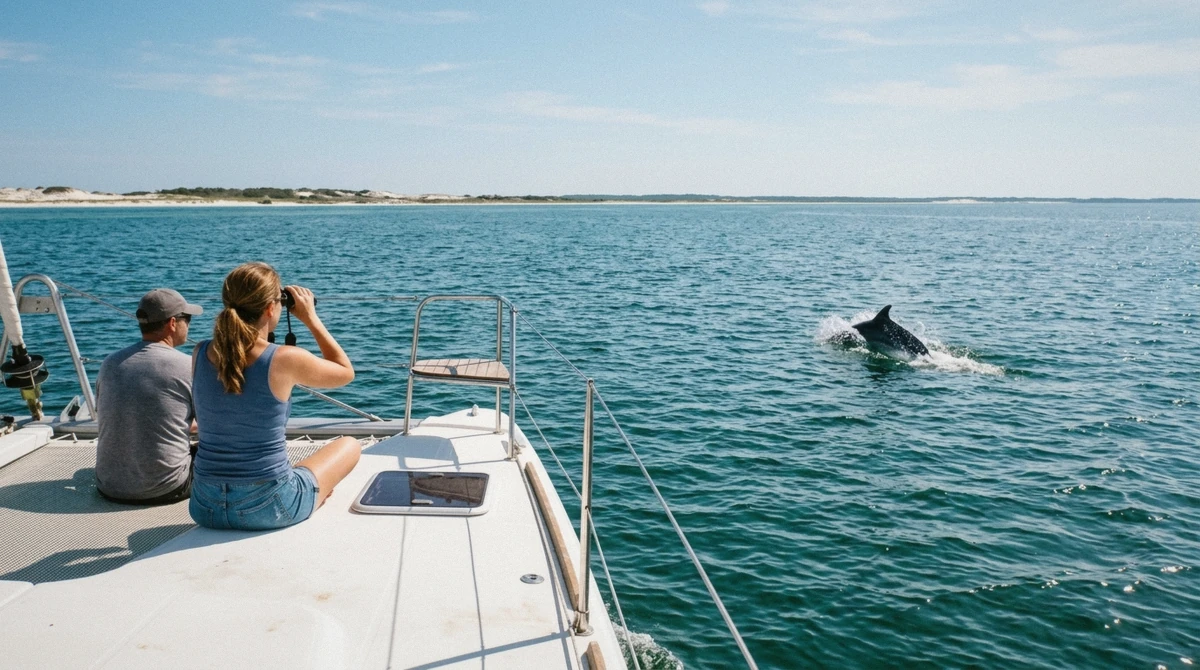
Shell Island dolphins are one of the main reasons the crossing itself is part of the trip and not just transportation. Bottlenose dolphins are resident year-round in St. Andrew Bay, and sightings on the boat ride over are common, though never something a guide can promise on any single trip. This guide covers what you'll actually see, the federal rules every boat here follows around wild dolphins, and the direct answer to the question we get asked more than any other: no, you cannot swim with them.
Quick answer
Bottlenose dolphins live year-round in St. Andrew Bay and are seen on most crossings to Shell Island, though a sighting is never guaranteed on any single trip. You cannot swim with, touch, or feed them; NOAA Fisheries asks boats and people to stay at least 50 yards away, and feeding wild dolphins is a federal offense.
Key takeaways
- Dolphins are common on the bay crossing, not a rare event, but reviews say 'most days,' never every single trip
- The 50-yard rule applies to every boat, including the two-stop dolphin watching trip
- Feeding a wild dolphin is illegal under the Marine Mammal Protection Act, and Panama City Beach has a documented illegal-feeding problem
- Swimming with or touching wild dolphins is never allowed, on any tour, at any distance
- Morning crossings and calm water tend to produce the clearest sightings; see how to get to Shell Island for departure times
- A long lens or a steady wide shot from the boat rail beats trying to get closer
What You Realistically See, by Likelihood
The table below covers what actually turns up on a typical crossing to Shell Island and around the bay flats, ranked honestly rather than optimistically. Dolphins lead the list because St. Andrew Bay is their home water, not a stop on a migration route, but every row below is a pattern, not a promise.
| What you see | Where | How often |
|---|---|---|
| Bottlenose dolphins | St. Andrew Bay crossing, resident year-round | On most crossings |
| Rays | Shallow bay-side flats near Shell Island | Sometimes, more common on calm days |
| Sea turtles | Open bay water and nearshore Gulf side | Rarely, worth watching for but uncommon |
| Shorebirds | Undeveloped Shell Island shoreline | On most trips, especially in nesting months |
| Fish over the flats | Shallow seagrass near the snorkel stop | Regularly seen while snorkeling, less so from the boat deck |
Read that as two different vantage points. Dolphins and shorebirds are mostly a from-the-boat experience, while the fish activity over the flats is what you actually see once you're in the water at the snorkel stop. Rays and turtles can turn up from either vantage, which is part of what makes them the lucky-day sightings on this list.
Boats That Cross the Resident Dolphins' Water
Every trip on this site crosses St. Andrew Bay on the way to Shell Island, which is exactly where the dolphins live, so dolphin watching happens on the ride over regardless of which one you book.
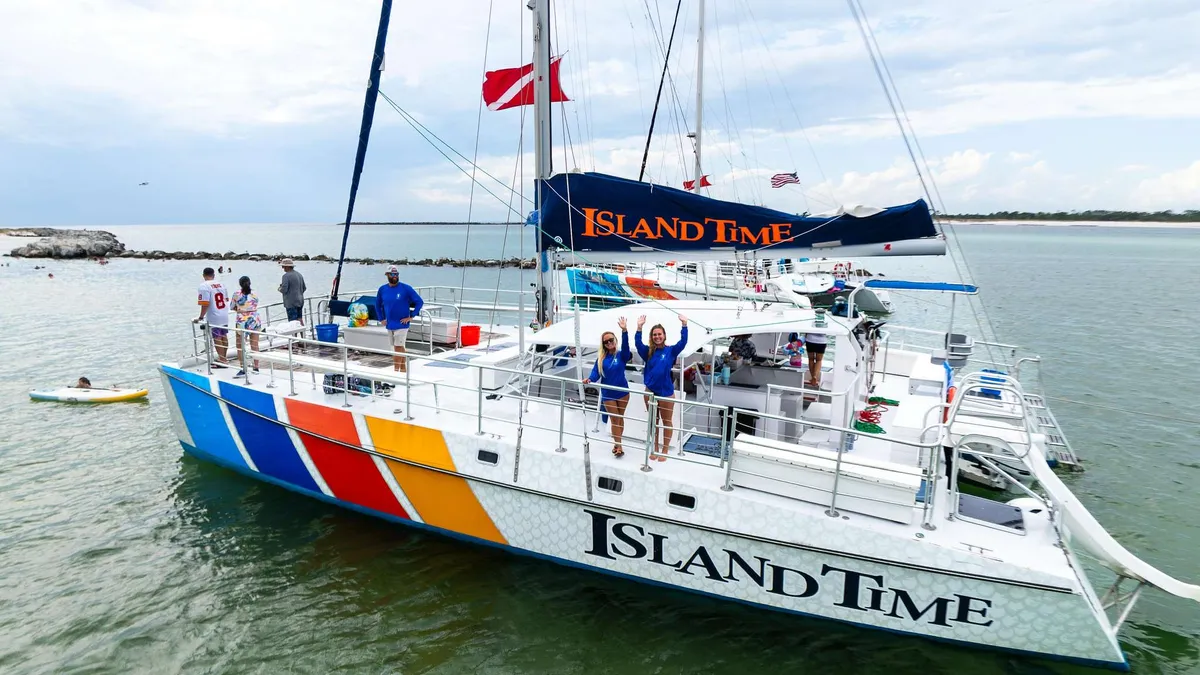 from $52Top Rated — 4.9★
 Shell Island Snorkel & Dolphin Catamaran Cruise
A 3-hour catamaran cruise from Panama City Beach out to Shell Island, with a snorkel stop in the clear, calm water of St. Andrew Bay and time to…
- 3-hour catamaran cruise to Shell Island
- Snorkel stop in calm, clear bay water
- Watch for bottlenose dolphins along the way
- Snorkel gear included, good for beginners
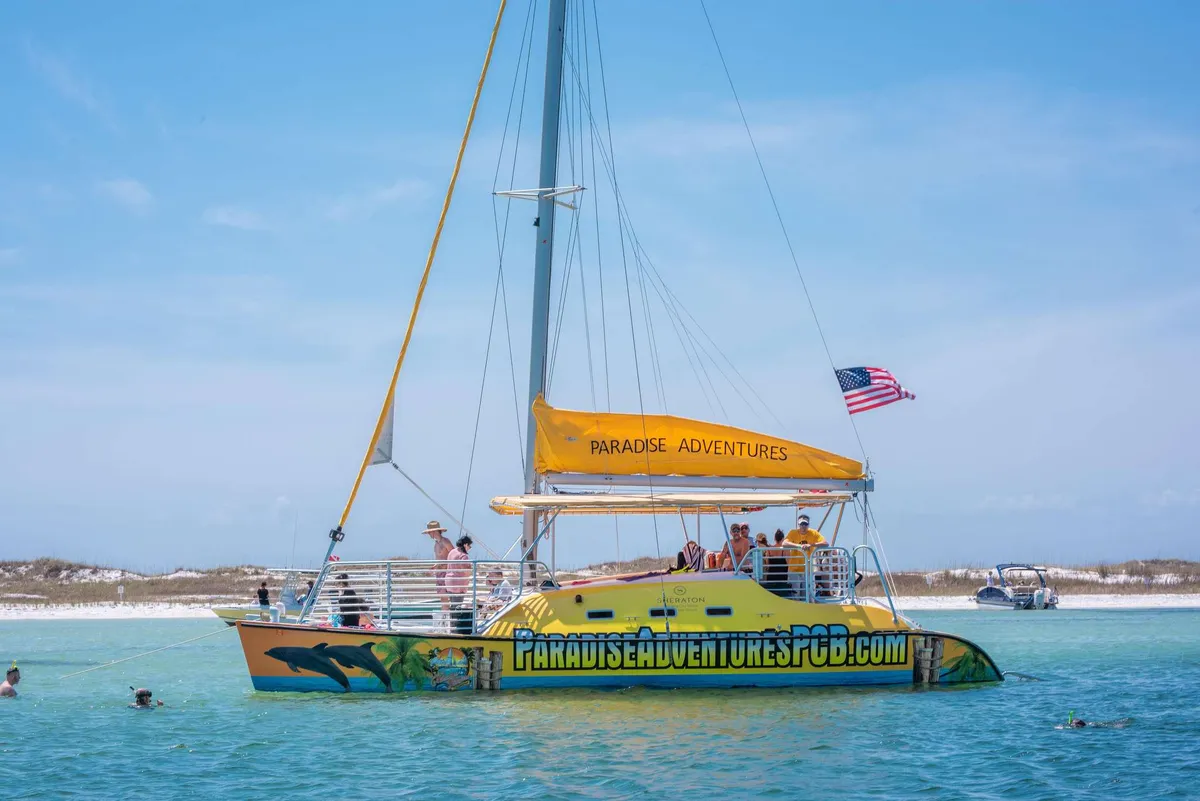 from $49Most Popular — 126 Reviews
 Shell Island Footloose Catamaran Snorkeling Tour
A 3-hour trip aboard the Footloose catamaran, cruising the blue-green water off Panama City Beach to snorkel around Shell Island and look for dolphins on the way. There…
- Sail aboard the Footloose catamaran
- Snorkel the clear water around Shell Island
- Dolphin watching on the cruise
- Time to collect seashells on the Gulf shore
 from $57Two Snorkel Stops
 Shell Island Snorkeling with Two Stops & Dolphin Watching
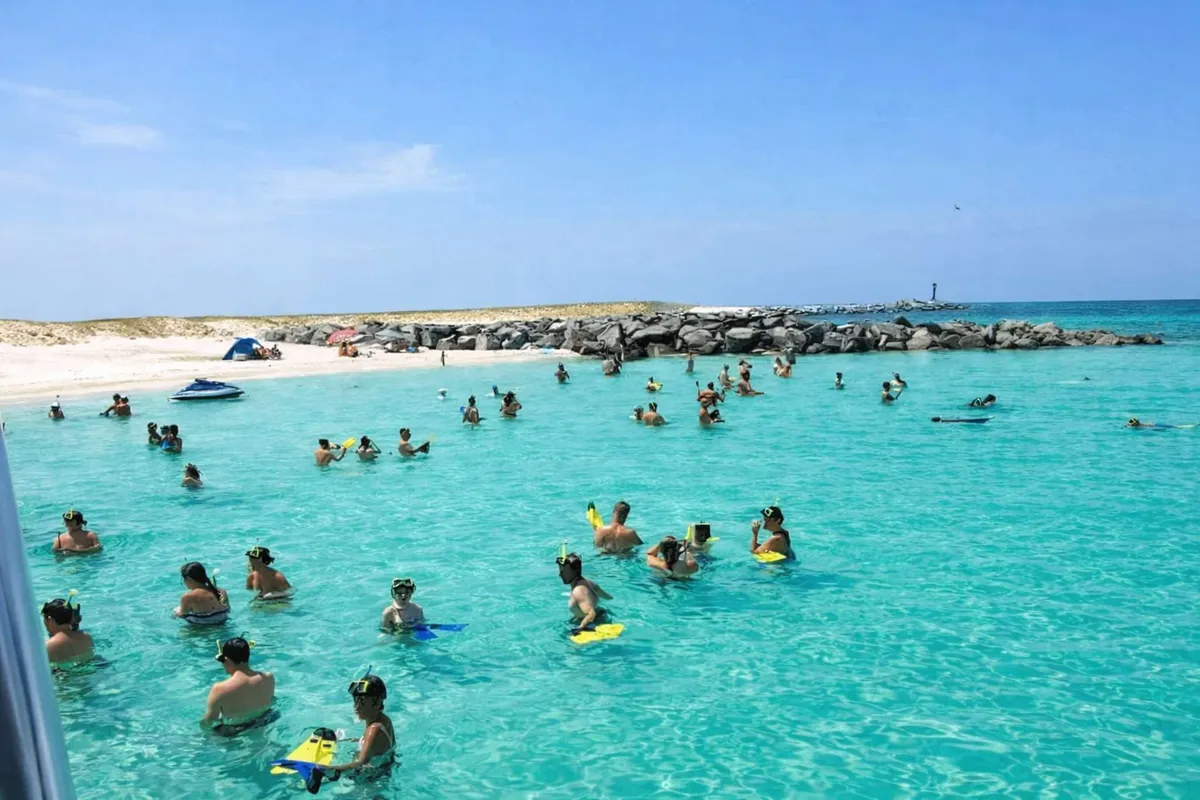
A 3-hour cruise from Panama City Beach with two snorkel stops around Shell Island, plus dolphin watching and time to relax on the island's pristine beaches. A knowledgeable…
- Two snorkel stops around Shell Island
- Dolphin watching in St. Andrew Bay
- Beach time on Shell Island's white sand
- Local crew with gear provided
Where the Dolphins Are in St. Andrew Bay and Why
Bottlenose dolphins are resident in St. Andrew Bay, meaning this population lives here year-round rather than passing through on a seasonal route. That's the actual reason sightings are common on the crossing rather than a lucky coincidence: boats cross the same stretch of water the pods use every day to feed and travel. The bay's mix of channel edges, seagrass flats and the pass itself gives dolphins the kind of varied water they favor for hunting, which is also why sightings cluster near the same general stretch of the crossing trip after trip.
The Rules: 50 Yards, No Feeding, No Swimming With Them
NOAA Fisheries recommends staying at least 50 yards, about 150 feet, from wild dolphins, on a boat or in the water alike. That distance isn't a suggestion dressed up as a guideline; it's the standard every responsible operator on this bay follows, and it's the reason a boat will slow and hold rather than motor in closer when dolphins are spotted.
| What you may do | What you may not do | Why |
|---|---|---|
| Watch from the boat, cameras ready | Approach closer than 50 yards | NOAA Fisheries distance guideline for wild dolphins |
| Let the dolphins choose the distance | Chase or follow a pod | Chasing is a form of harassment under federal law |
| Keep the boat's engine at a steady, predictable speed | Rev or maneuver aggressively near a sighting | Sudden engine noise and movement can stress the animals |
| Photograph from a distance | Feed or attempt to feed a dolphin | Illegal under the Marine Mammal Protection Act |
| Enjoy a wide shot of the pod at a distance | Touch or attempt to swim with a dolphin | NOAA does not condone any contact with wild dolphins |
| Photograph with a standard camera or phone | Fly a drone directly over a sighting | Disturbs the animals and is discouraged near wildlife |
Feeding or attempting to feed a wild dolphin is illegal under the Marine Mammal Protection Act, and so is harassing one, which legally covers chasing, cornering or otherwise disrupting its normal behavior. None of this is abstract policy language for St. Andrew Bay specifically; Panama City Beach has a documented history of illegal dolphin feeding, which is exactly why the rule gets stated plainly here rather than assumed.
Why Feeding Wild Dolphins Is the Local Problem It Is
A dolphin that learns to associate a boat with food changes its whole behavior, and not for the better. It starts approaching boats expecting a handout instead of hunting naturally, which puts it in the path of propellers and fishing gear, and it can pass that learned behavior on to its calves. That's the actual mechanism behind the federal ban, not an abstract rule for its own sake, and it's why every operator on this bay treats the no-feeding rule as absolute rather than something to bend for a better photo.
So the direct answer to the question we hear most: no, you cannot swim with dolphins here, ever, on any tour, at any price point. Watch from the boat, let the animals set the distance, and keep any food strictly for the humans on board. Every operator running Shell Island trips follows this, and any that didn't would be putting the whole local population at risk for a single afternoon's entertainment.
Best Time of Day and Year for a Sighting
Because the population is resident year-round, there's no dolphin season to plan around the way there might be for a migrating species. Morning crossings on calm water tend to be the best window, since flat water makes fins and surfacing dolphins easier to spot from the deck, and boat traffic is lighter before the day's heaviest recreational use of the bay builds up. None of that turns a maybe into a guarantee; it just improves the odds of noticing what's already there.
How to Actually Watch and Photograph Them From a Boat
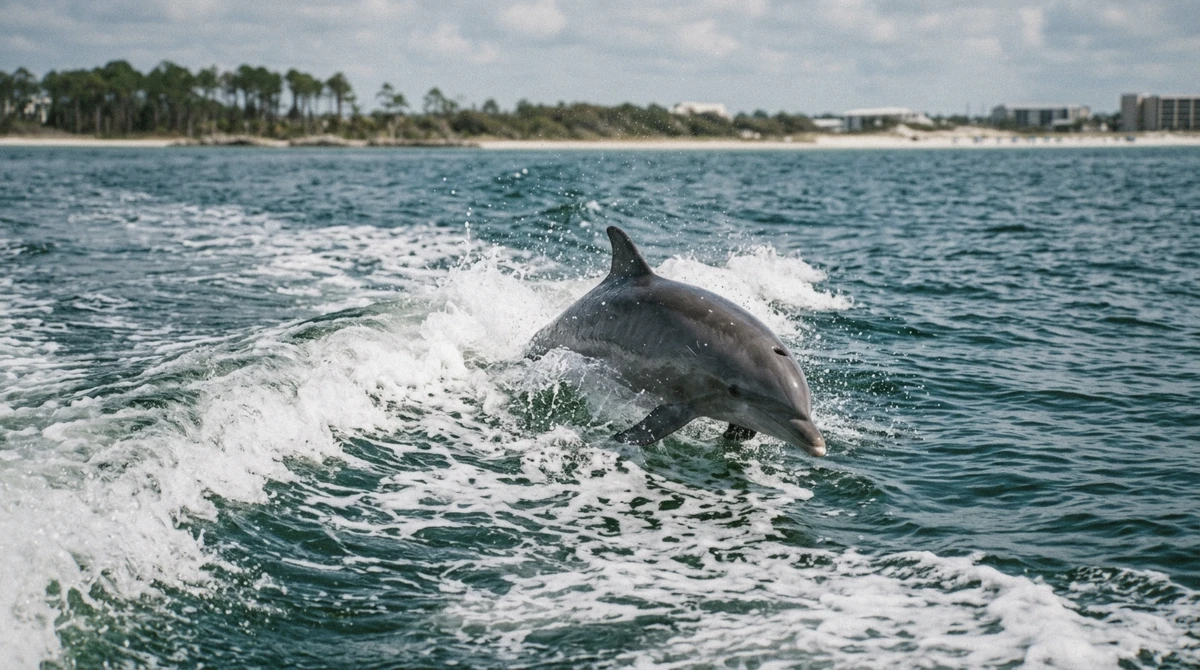
The best photos come from staying still and staying at the rail, not from moving toward a sighting. A long lens gets you a tight shot of a dorsal fin or a breach without closing the required distance; a wide-angle shot that includes the boat's own wake and the open bay often tells a better story anyway, since it shows the dolphin choosing to ride alongside a moving boat on its own terms.
Never lean over the rail chasing a better angle, and never ask the captain to close in past 50 yards for a photo; a responsible crew won't do it regardless of how the request is phrased. Drones stay grounded near any sighting, since an aircraft overhead is its own form of disturbance even without physical contact. Patience beats positioning here: dolphins that are genuinely curious about a boat will often approach on their own, closer than the boat itself is permitted to go, which is the moment worth having a camera ready for rather than the moment worth chasing.
No Sighting Is Guaranteed, and What Operators Do About It
We never promise a sighting, and any operator that does is overselling a wild animal's behavior. What every boat here does instead is run the same stretch of bay the resident pods actually use, at a pace and course that gives everyone on board the best real chance of noticing dolphins if they're active that day. Reviews across the trips on this site regularly mention dolphins, which is a fair signal of how often they show up, but 'regularly mentioned' is honest language, not a promise.
Planning a Trip Around a Sighting
Which crossing puts you in their water longest
Time on the water is the only variable you control. Every trip from Panama City Beach crosses St. Andrew Bay, but the boats spend that time differently. The Footloose catamaran sail at $49 runs quietly under sail for part of the crossing, which some crews reckon helps. The two-stop snorkel trip at $57 makes a second anchor stop, so the boat is idle in the bay for longer and idle time is when animals tend to come to you rather than away from you. The $52 snorkel and dolphin cruise sits between the two. None of that is a guarantee, and any crew who tells you otherwise is selling something.
Last verified: August 2026.
Conditions matter more than the calendar
A flat morning in October will show you more than a choppy afternoon in July. Dorsal fins and surface swirls disappear into a wind chop, and glare off a rippled surface hides everything below it. Book the earliest departure you can and you get the calmest water of the day, which is also the clearest water for the snorkel stop.
Our month-by-month guide to water and conditions covers what each part of the year actually looks like on the bay, including the weeks when trips get called off.
What to have with you
Nothing on this list is about the dolphins, which is rather the point: you cannot make them appear, so you plan for everything else. Sun cover, water and a camera you can hold one-handed on a moving deck. The island itself has no restrooms, no shade and no store, so read the Shell Island packing checklist before you leave the hotel.
If you are still deciding how to cross at all, every route and what it costs lays out the shuttle, the guided boats and the reasons not to paddle.
St. Andrew Bay's dolphins are one of the genuine reasons the crossing itself is worth savoring rather than just enduring on the way to the island. Keep the camera ready, keep the distance the animals set, and remember that the rules here exist because this population has to live with the boat traffic every single day, not just the day you're visiting. For the current lineup of trips that cross this water, see Shell Island dolphin cruises.
Frequently Asked Questions
Are there dolphins at Shell Island?
Yes. Bottlenose dolphins are resident year-round in St. Andrew Bay, the water every boat crosses on the way to Shell Island, and they're seen on most crossings.
Can you swim with dolphins in Panama City Beach?
No. NOAA does not condone approaching, touching, or swimming with wild dolphins under any circumstances, on any tour. Watching from the boat at a safe distance is the only responsible option.
How close can a boat get to a dolphin?
NOAA Fisheries recommends staying at least 50 yards, about 150 feet, from wild dolphins. Every trip listed here, including the Shell Island Snorkel & Dolphin Catamaran Cruise, follows that distance.
Is it illegal to feed wild dolphins in Florida?
Yes. Feeding or attempting to feed a wild dolphin is illegal under the federal Marine Mammal Protection Act, and harassment (chasing, cornering, or disrupting normal behavior) is also prohibited.
What time of day are dolphins most active?
Morning crossings on calm water tend to give the best chance of spotting them, since flat water makes fins easier to see and boat traffic is lighter earlier in the day.
What are the chances of seeing dolphins on a Shell Island trip?
Sightings are common, and reviews across the trips on this site regularly mention them, but no operator can honestly guarantee a sighting on any single crossing. Every trip does cross the resident pods' home water in St. Andrew Bay regardless.