Snorkeling at St. Andrews State Park: the Jetties and the Cove
Snorkeling at St. Andrews State Park does not require a boat, and the jetties there are widely considered the best shore snorkeling on this stretch of the Gulf coast. Two rock jetties form a sheltered cove, fish sit within a few feet of the rocks, and on a calm day the water runs clear enough to see well past 20 feet. It is a genuinely different experience from a boat trip to Shell Island across the pass, and this guide lays both options out honestly so you can pick the right one for the day you actually have.
Quick answer
Yes, you can snorkel at St. Andrews State Park without a boat: the rock jetties on the park's western tip form a sheltered cove with shore entry, fish close to the rocks, and visibility over 20 feet on calm days. It costs only the park's own entrance fee, no separate charge to snorkel, but it depends heavily on wind and the day's flag conditions.
Key takeaways
- The jetties form a sheltered cove that is genuinely the best shore snorkeling on this part of the coast, no boat needed
- Visibility runs over 20 feet on calm days, best in fall and on still mornings
- Expect sheepshead, spadefish, sergeant majors and the occasional ray or octopus among the rocks
- It costs only the park's $8/$4/$2 entrance fee; a boat trip like the two-stop dolphin tour costs more but reaches the bay-side flats you can't walk to
- Double red flags mean the water is closed, and Panama City Beach fines swimmers $500 for going in anyway
- For the full breakdown of how to physically reach the park gate, see how to get to Shell Island
The Jetties, the Cove and the Kiddie Pool: What Is Where
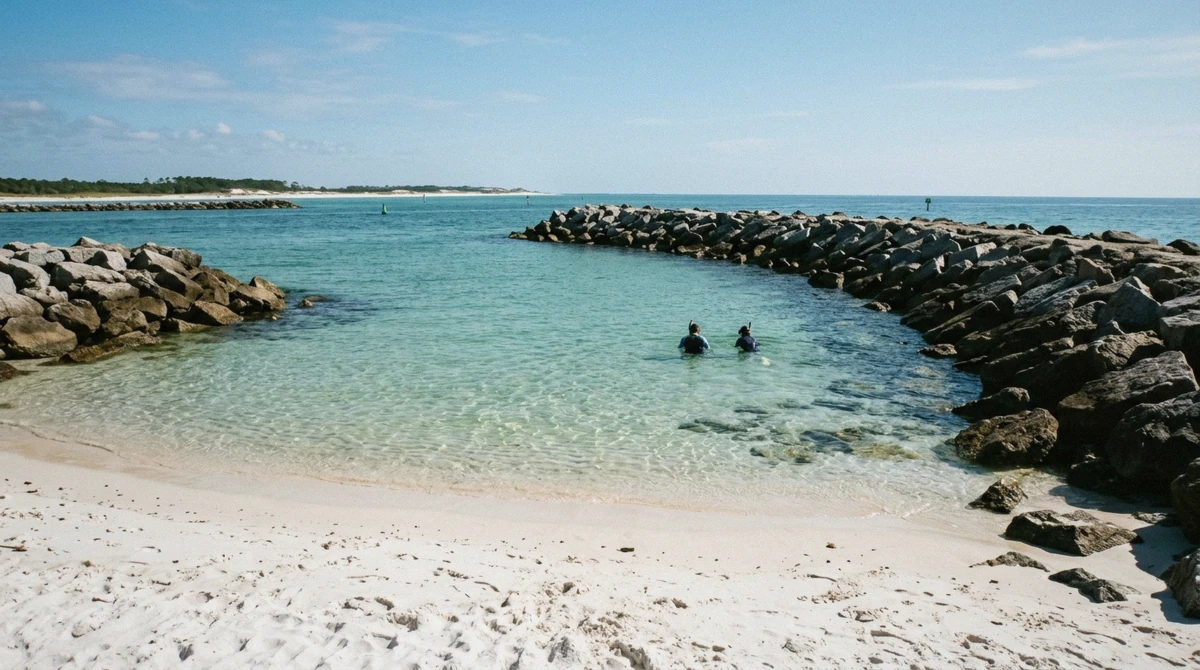
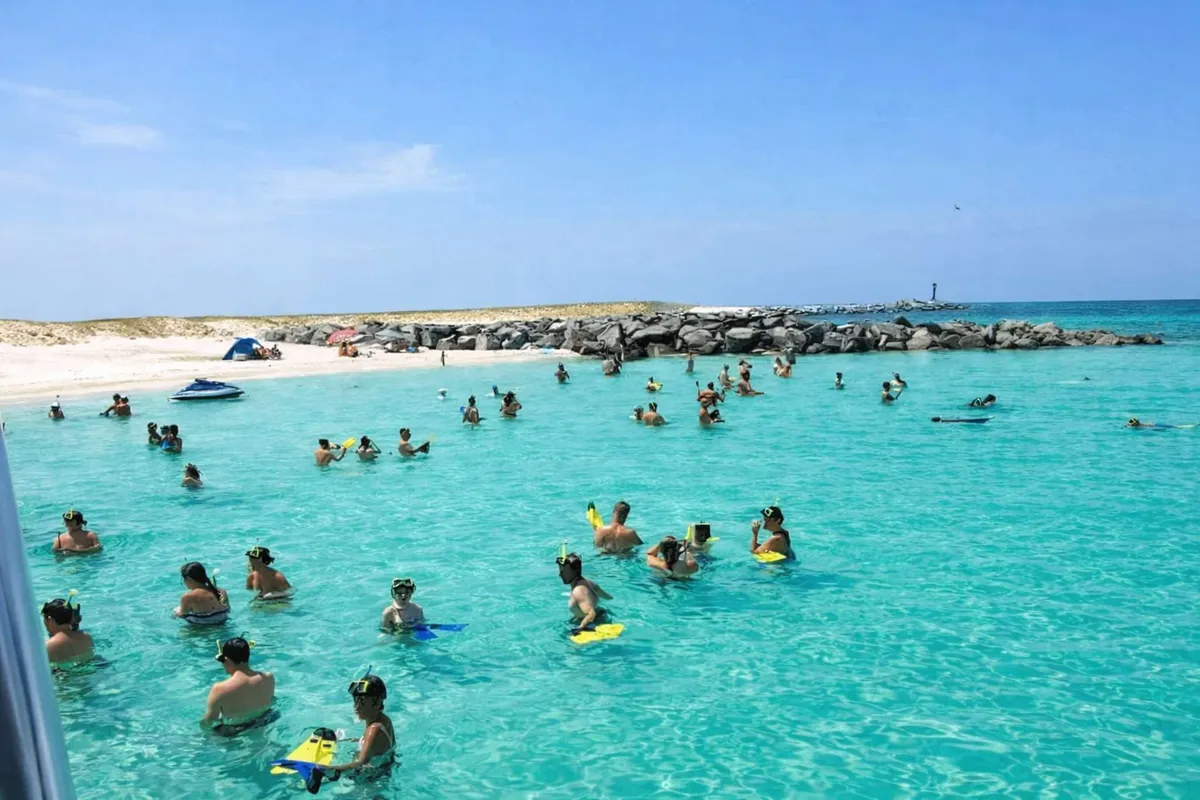
Two rock jetties sit at the western tip of St. Andrews State Park, directly across the pass from Shell Island. They were laid to protect the shipping channel and have worked as an artificial reef ever since, which is the whole reason the snorkeling here holds up against spots you'd otherwise need a boat to reach. Between the jetties and the shore, the rock formation creates a sheltered cove, calmer than the open Gulf side and the standard entry point for most snorkelers.
The kiddie pool
On the landward side of the jetties sits what locals call the kiddie pool: shallow, protected, waist-deep water that is the standard spot for young children and nervous first-time snorkelers. It doesn't have the same fish density as deeper along the rocks, but it's the easiest place in the whole park to get comfortable with a mask and snorkel before moving toward the main jetty line.
Snorkel gear, mask, snorkel and fins rent from concession stores inside the park, so you don't need to own equipment to try this. We don't have a verified rental rate to publish, so call ahead or check the concession stand price board when you arrive.
Shore Snorkeling at the Jetties vs a Boat Trip to Shell Island
Shore snorkeling at the jetties
- Free once you're through the park gate, just the $8/$4/$2 entrance fee
- No schedule to work around, go whenever the park is open
- Crowded on weekends and holidays, especially near the kiddie pool
- Wind-dependent visibility, can turn cloudy fast when the breeze picks up
- No lifeguard on duty at the jetties
- Real current runs through St. Andrews Pass right beside the swimming area
Boat trip to Shell Island
- Gear and crew included in the ticket price
- Calm, sheltered bay flats even when the Gulf side is choppy
- Access to the undeveloped island itself, not just the park side of the pass
- Bottlenose dolphins commonly seen crossing St. Andrew Bay
- Fixed departure time and a set fare, $49 to $57 for three hours
- Crew on hand if conditions or a swimmer need attention
Verdict The jetties are genuinely good, not a consolation prize, and on a calm morning with light crowds they can beat anything a boat trip offers for fish density in shallow water. But they depend entirely on the day: wind, tide and crowd all swing the experience, and there's no crew watching the water. A boat trip trades that variability for a fixed schedule, gear, calmer water and a shot at dolphins on the crossing. If you're only in town for one day and the flags are yellow or worse, book the boat.
Boat Trips for the Days the Shore Doesn't Work
When the jetties are blown out, crowded, or you'd rather have gear and a crew handled for you, these trips reach the calmer bay-side flats near Shell Island instead.
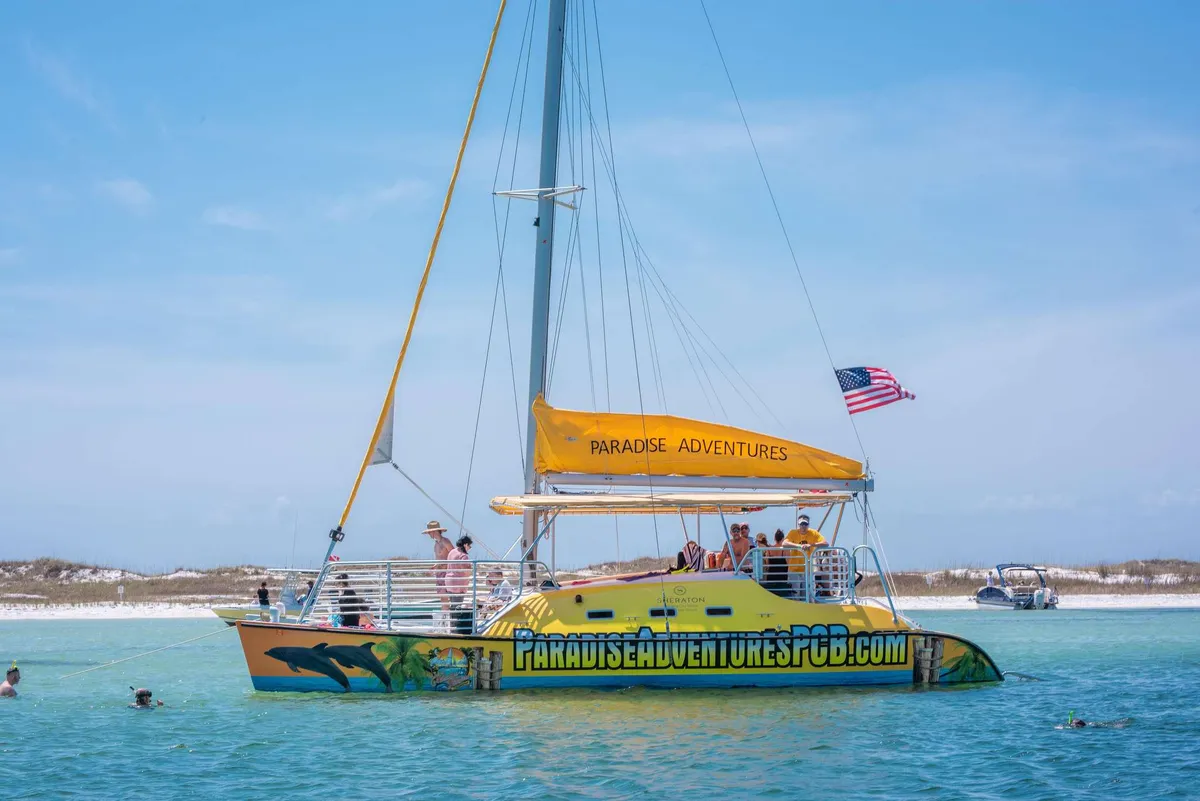 from $49Most Popular — 126 Reviews
 Shell Island Footloose Catamaran Snorkeling Tour
A 3-hour trip aboard the Footloose catamaran, cruising the blue-green water off Panama City Beach to snorkel around Shell Island and look for dolphins on the way. There…
- Sail aboard the Footloose catamaran
- Snorkel the clear water around Shell Island
- Dolphin watching on the cruise
- Time to collect seashells on the Gulf shore
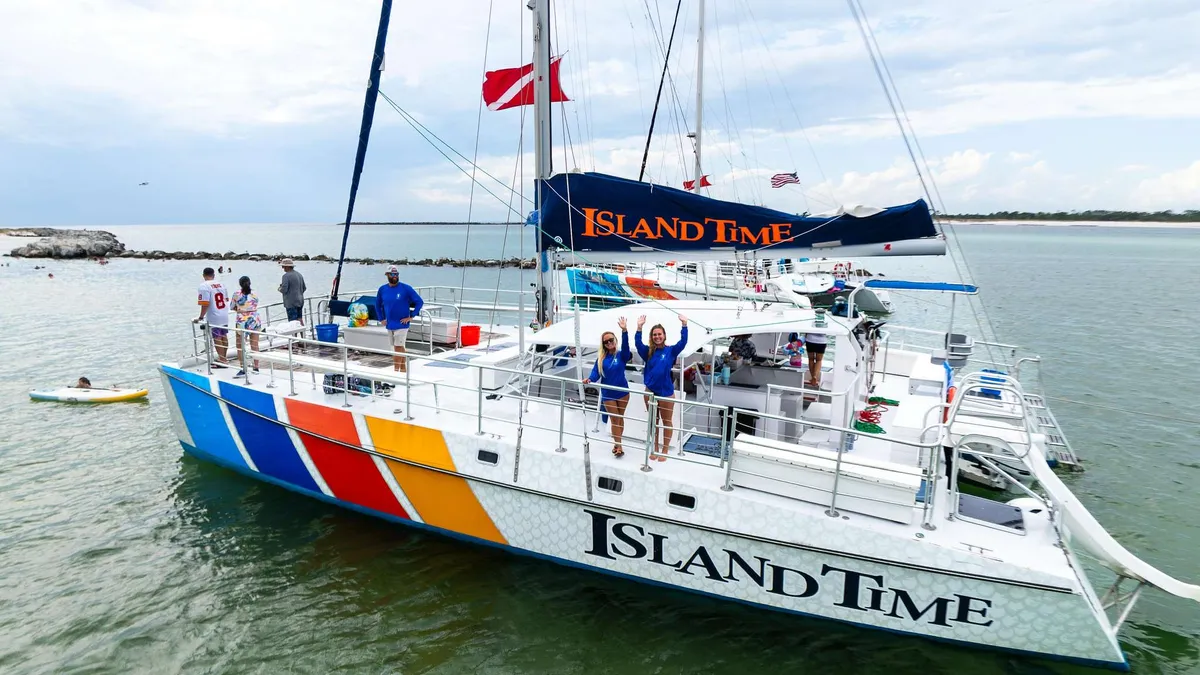 from $52Top Rated — 4.9★
 Shell Island Snorkel & Dolphin Catamaran Cruise
A 3-hour catamaran cruise from Panama City Beach out to Shell Island, with a snorkel stop in the clear, calm water of St. Andrew Bay and time to…
- 3-hour catamaran cruise to Shell Island
- Snorkel stop in calm, clear bay water
- Watch for bottlenose dolphins along the way
- Snorkel gear included, good for beginners
 from $57Two Snorkel Stops
 Shell Island Snorkeling with Two Stops & Dolphin Watching
A 3-hour cruise from Panama City Beach with two snorkel stops around Shell Island, plus dolphin watching and time to relax on the island's pristine beaches. A knowledgeable…
- Two snorkel stops around Shell Island
- Dolphin watching in St. Andrew Bay
- Beach time on Shell Island's white sand
- Local crew with gear provided
What You Actually See in the Rocks
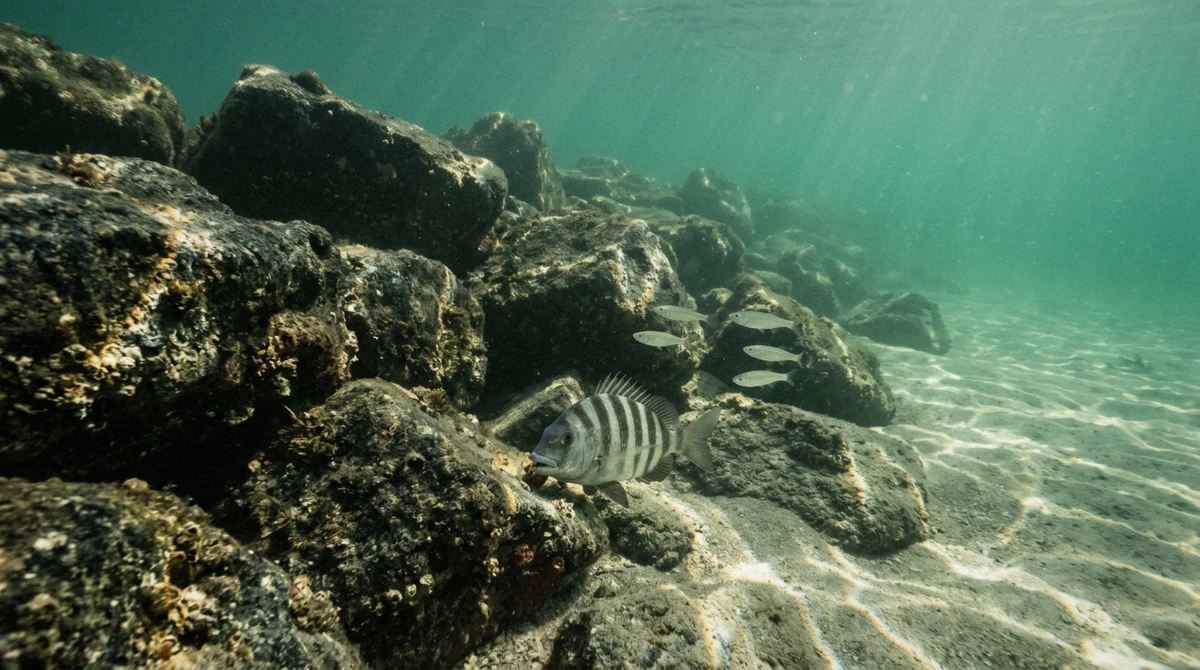
The species list at the jetties is real and repeatable, though we never promise any single one on a given visit. Sheepshead and spadefish hold tight to the rocks, sergeant majors dart in loose schools, and flounder sit flat against the sandy patches between boulders. Rays and the occasional octopus turn up for patient swimmers who look into the gaps rather than just the open water.
| Species | Where in the cove | How often |
|---|---|---|
| Sheepshead | Tight against the rock faces | Regular sighting on most calm days |
| Spadefish | Mid-water near the deeper jetty sections | Common in loose schools |
| Sergeant majors | Shallow water near the rocks | Very common, easy first sighting for beginners |
| Flounder | Sandy patches between boulders | Occasional, needs a slow, careful look |
| Mangrove snapper | Shaded pockets along the jetty base | Regular but not guaranteed |
| Redfish | Along the sandy cove floor | Occasional, more common on a rising tide |
| Rays | Open sand near the cove entrance | Occasional |
| Octopus | Crevices and rock gaps | Rare, a genuine find when it happens |
Blennies, crabs and starfish round out the smaller life in the rocks, worth a look for anyone who slows down rather than swimming straight through. Live shells, sand dollars and starfish need to go back where you found them; harvesting anything living requires a Florida saltwater fishing licence even from shore.
Getting In: Entry Points, Tides and Current
Most snorkelers enter from the sandy shore near the kiddie pool and work their way out along the rock line as visibility and comfort allow. Timing matters more than the calendar does here: mornings, before the afternoon sea breeze picks up, and around slack tide or a gentle rising tide tend to hold the clearest water. Wind, not the season, is what usually ruins visibility on a given day, so check the forecast the morning of rather than trusting a plan made a week out.
St. Andrews Pass sits right beside the jetties and carries genuine current, especially near the pass mouth and on an outgoing tide. Stay inside the sheltered cove rather than drifting toward open water near the pass, and never swim across toward Shell Island from here; that crossing belongs to a boat, not a snorkeler.
Reading the Flags Before You Get in the Water
Panama City Beach flies the International Life Saving Federation flag system, and it is not a suggestion. Green means low hazard, yellow means medium hazard with moderate surf or current, red means high hazard, and double red means the water is closed to the public. Swimming when double red flags fly is an ordinance violation in Panama City Beach and carries a $500 fine.
A purple flag flies alongside a color flag, not instead of one, and means dangerous marine life has been spotted.
| Flag | Meaning | What to do |
|---|---|---|
| Green | Low hazard | Normal caution |
| Yellow | Medium hazard, moderate surf or current | Stay alert, keep closer to shore |
| Red | High hazard | Experienced swimmers only, strongly reconsider |
| Double red | Water closed to the public | Stay out; $500 fine for swimming |
| Purple | Dangerous marine life spotted (flies with a color flag) | Watch for jellyfish or similar, don't touch anything unfamiliar |
Rip currents are the real killer on this coast, and drownings have happened here on yellow-flag days, not just red ones. Don't read yellow as fine. If you're caught in a rip, don't swim against it; swim parallel to shore until you're free of the pull, then head in.
Shell Island itself has no lifeguards at all, and the jetties have none on duty either, so the flag reading is the only warning system you get before you're in the water.
What It Costs to Snorkel the Jetties
The only mandatory cost is the park entrance fee, since there is no separate snorkeling charge at the jetties themselves. Gear rental from the concession stores is the one variable cost, and we don't have a verified rate to print, so check the price board when you arrive or call the park ahead of time.
| Item | Cost |
|---|---|
| Vehicle entrance, 2 to 8 people | $8 |
| Single-occupant vehicle | $4 |
| Pedestrian or cyclist | $2 |
| Snorkel gear rental | No verified rate; check the park concession stand |
By comparison, a boat trip to Shell Island runs $49 to $57 per person for three hours, gear included, no separate entrance fee since the boats leave from the marinas rather than through the park gate. Last verified: August 2026.
When the Jetties Are Worth It and When They Are Not
The jetties earn their reputation on a calm morning with light wind, a green or yellow flag, and a crowd thin enough to move along the rocks without bumping fins with a dozen other snorkelers. That combination shows up more often in fall and on early weekday mornings than on a summer Saturday afternoon.
They are not worth it on a red or double-red flag day, when the wind has stirred up the cove and visibility has dropped to a few feet, or when the parking lot is already full by mid-morning in July. On those days a boat trip to the calmer bay-side flats near Shell Island, described in the boat trip comparison above, is the better use of a limited window of good weather.
Shore or Boat Today
If the flags are green or yellow, wind is light and it's a weekday morning
the jetties are a genuinely great choice, walk in and save the money.
If the flags are red or double red
skip the shore entirely; consider a boat trip to the sheltered bay side instead, or wait for a better day.
If you're traveling with young kids or nervous first-timers
start in the kiddie pool at the jetties, or book a boat trip where a crew is on hand the whole time.
If it's a weekend in peak summer and you want to avoid crowds
arrive at park opening or choose a boat trip to the less-crowded island side instead.
If you want to reach the undeveloped Shell Island shoreline itself, not just the park side of the pass
book a boat, since the jetties don't get you onto the island.
Building a Day Around the Jetties
Pairing a shore session with a boat trip
The two do not compete, they run at different times of day. Morning is when the cove is calmest and least crowded, and morning is also when the boats leave. A workable plan for a longer stay: take a boat trip out to the island on your first morning at $49, then come back for the jetties on a second morning once you know what the water here looks like and where the fish sit.
Doing it the other way round tends to leave people underwhelmed by the cove, because they have not yet seen the bay flats the boats anchor over.
When the shore option is out
Onshore wind, a red flag, or a spring-break weekend will all take the cove off the table, and there is no rescheduling a beach. The boats keep running in conditions that spoil a shore entry because they can move to the sheltered side of the island, so a wind forecast that kills the jetties often leaves the two-stop snorkel trip at $57 perfectly workable. Our month-by-month conditions guide sets out which parts of the year bring which problems, and the packing checklist covers what to carry for a day with no facilities at the far end.
Dolphins from the rocks
Bottlenose dolphins work the pass and come close enough to the jetties that people see them from the rocks, usually on a moving tide. Watching from shore is fine. Swimming toward them is not, and neither is feeding them: NOAA asks for 50 yards of distance and feeding wild dolphins is a federal offence.
Our guide to dolphins at Shell Island covers what the rules mean in practice.
Both sides of St. Andrews Pass reward patience more than ambition. The jetties give you a genuinely wild shore snorkel with no boat required, and a trip across to Shell Island gives you calmer water and a shot at dolphins on the way. Neither one is the fallback option; they're just different answers depending on the wind that particular morning.
Bring your own gear or rent it at the concession stand, respect the flags, and both sides deliver. For the current lineup of trips across the pass, see guided Shell Island snorkel trips.
Frequently Asked Questions
Can you snorkel at St. Andrews State Park?
Yes. The rock jetties at the park's western tip form a sheltered cove with shore entry, no boat needed, and it's considered the best shore snorkeling on this stretch of coast.
Where is the best snorkeling at St. Andrews State Park?
Along the rock jetties themselves and in the sheltered cove they create, with the kiddie pool as the calmer, shallower entry point for beginners and kids.
Is snorkeling at the jetties safe?
It depends entirely on the day's flags and current. Green or yellow flags with light wind are generally fine; red or double red mean stay out, and double red carries a $500 fine for swimming. There is no lifeguard on duty at the jetties.
Do you need to book a tour to snorkel near Shell Island?
No, the jetties at St. Andrews State Park are a genuine shore option. A boat trip like the Footloose Catamaran tour is worth it if you want calmer water, gear included and a shot at dolphins on the bay-side flats near the island itself.
How much does it cost to snorkel at the jetties?
Only the park's entrance fee applies: $8 per vehicle with 2 to 8 people, $4 single-occupant, $2 for pedestrians or cyclists. Gear rental from the concession stand is the one variable cost.
What fish will I see at the jetties?
Sheepshead, spadefish and sergeant majors are common sights, with flounder, mangrove snapper, redfish, rays and occasionally an octopus among the rocks. No single species is ever guaranteed.
Can beginners and children snorkel there?
Yes, especially in the kiddie pool on the landward side of the jetties, which is shallow and protected. For nervous first-timers who'd rather have a crew nearby, a guided boat trip to the calmer flats near Shell Island is worth considering too.